<< Back
Skin Cancer Isn’t Just Moles. Watch for These 6 Signs
August 20, 2026
Skin cancer doesn’t always look the way you’d expect.
Most people know to keep an eye on their moles, especially if one starts changing in size, shape or color. But a suspicious mole is only one way skin cancer can show up.
It can also look like a dry patch that won’t go away, a shiny pink bump, a scaly spot or just something that looks different from the skin around it.
“Patients often expect skin cancer to look alarming,” says Jill Rubinstein, MD, PhD, a surgical oncologist with Hartford HealthCare’s Cancer Institute. “But many skin cancers start very quietly. The biggest thing we look for is something new, changing or different from the rest of your skin.”
Here are the skin cancer signs to watch for, according to Dr. Rubinstein.
1. One mole suddenly stands out from the rest
Most people have a pattern to their moles and freckles, even if they haven’t noticed it before.
“But sometimes, one spot just doesn’t seem to fit,” says Dr. Rubinstein. “It may be darker, lighter, larger or shaped differently. If it makes you pause or look twice, that’s a good reason to give us a call.”
Dermatologists often call this the “ugly duckling” sign. Watch for:
- A lesion that keeps catching your attention.
- A mole that stands out from nearby spots.
- A spot that simply feels different from the rest of your skin.
“A lot of people assume melanoma always looks black or very irregular,” Dr. Rubinstein adds. “But some concerning spots can actually look pink, tan or even skin-colored, so the pattern of change matters just as much as the color.”
> Related: 5 Signs of a Cancerous Mole
2. A spot is changing over time
When it comes to skin cancer, change matters.
“One of the biggest red flags is evolution,” says Dr. Rubinstein. “A spot that looked the same for years and then starts to change deserves attention, even if it doesn’t hurt, bleed or look dramatic.”
A spot may:
- Become darker.
- Change shape.
- Develop multiple colors.
- Grow larger.
- Start itching, crusting or bleeding.
“The tricky part is that skin cancer often develops without pain,” Dr. Rubinstein explains. “People wait because it doesn’t hurt or seem urgent, but change is still one of the biggest clues. Early detection can make a huge difference because many skin cancers are very treatable when they’re caught early.”
> Related: Where to Check for Skin Cancer, Based on Your Gender
3. The ABCDE rule still matters – but it’s not perfect
You may have heard of the ABCDEs of melanoma before, and dermatologists still use them.
“This checklist is helpful, but it’s not foolproof,” says Dr. Rubinstein. “People sometimes falsely reassure themselves because a spot doesn’t check every box.”
Here’s what ABCDE stands for:
- Asymmetry: One half does not match the other.
- Border: The edges look uneven, blurry or ragged.
- Color: The spot has multiple shades or uneven color.
- Diameter: The spot is larger than about 6 millimeters, though smaller spots can still matter.
- Evolving: The spot changes over time.
“Again, evolution is often the biggest clue,” Dr. Rubinstein says. “A spot that’s changing deserves attention even if it looks relatively normal otherwise.”
4. A sore that won’t heal can be a warning sign
Not all skin cancers start as moles.
“Some look more like a stubborn sore, dry patch, irritated spot or scab that never fully heals,” says Dr. Rubinstein. “People often assume it’s a scratch, pimple or patch of dry skin that’ll go away on its own. But if it doesn’t, we want to know.”
These spots often appear on sun-exposed areas, including:
- Chest
- Ears
- Face
- Hands
- Neck
- Scalp
“That cycle of healing and then returning can actually be a clue, too,” Dr. Rubinstein explains. “Skin cancers don’t always grow quickly or dramatically. Sometimes persistence is what tells us we should take a closer look.”
> Related: 5 Risk Factors for Skin Cancer You Should Know
5. Skin cancer doesn’t always look dark
One of the biggest myths about skin cancer is that it always looks brown or black.
“In reality, many skin cancers are pink, red, shiny, rough or even close to your normal skin color, which can make them easy to miss,” says Dr. Rubinstein.
Skin cancer can sometimes appear as:
- A firm bump that slowly enlarges.
- A pink or irritated area.
- A rough, scaly patch.
- A shiny or pearly bump.
- A wart-like growth.
“These spots can look like acne, eczema, irritation or a harmless bump, so people may try to treat them at home first,” says Dr. Rubinstein. “But if something isn’t improving the way you’d expect, it’s worth getting another opinion instead of guessing.”
> Related: Sun Poisoning vs. Sunburn: How to Tell the Difference
6. Sometimes skin cancer feels different before it looks different
Most harmless moles don’t suddenly itch, hurt or become tender.
“So if one spot starts behaving differently, even before it looks dramatically different, pay attention,” says Dr. Rubinstein. “Itching, tenderness or other symptoms aren’t always there. But when they are, they can be important clues.”
A spot may:
- Become sensitive to touch.
- Feel irritated for no obvious reason.
- Feel tender or painful.
- Itch persistently.
“People know their own skin better than they think,” Dr. Rubinstein adds. “Symptoms don’t always mean cancer, but if one specific spot keeps feeling different, trust yourself and get it checked.”
> Related: Your Summertime Guide to Preventing and Detecting Skin Cancer
When to see a doctor
You don’t need to become an expert at diagnosing skin cancer. You just need to know which skin cancer signs are worth asking about.
“If a spot looks clearly suspicious, going directly to dermatology may save time,” says Dr. Rubinstein. “But primary care providers are also very good at recognizing when something needs further evaluation.”
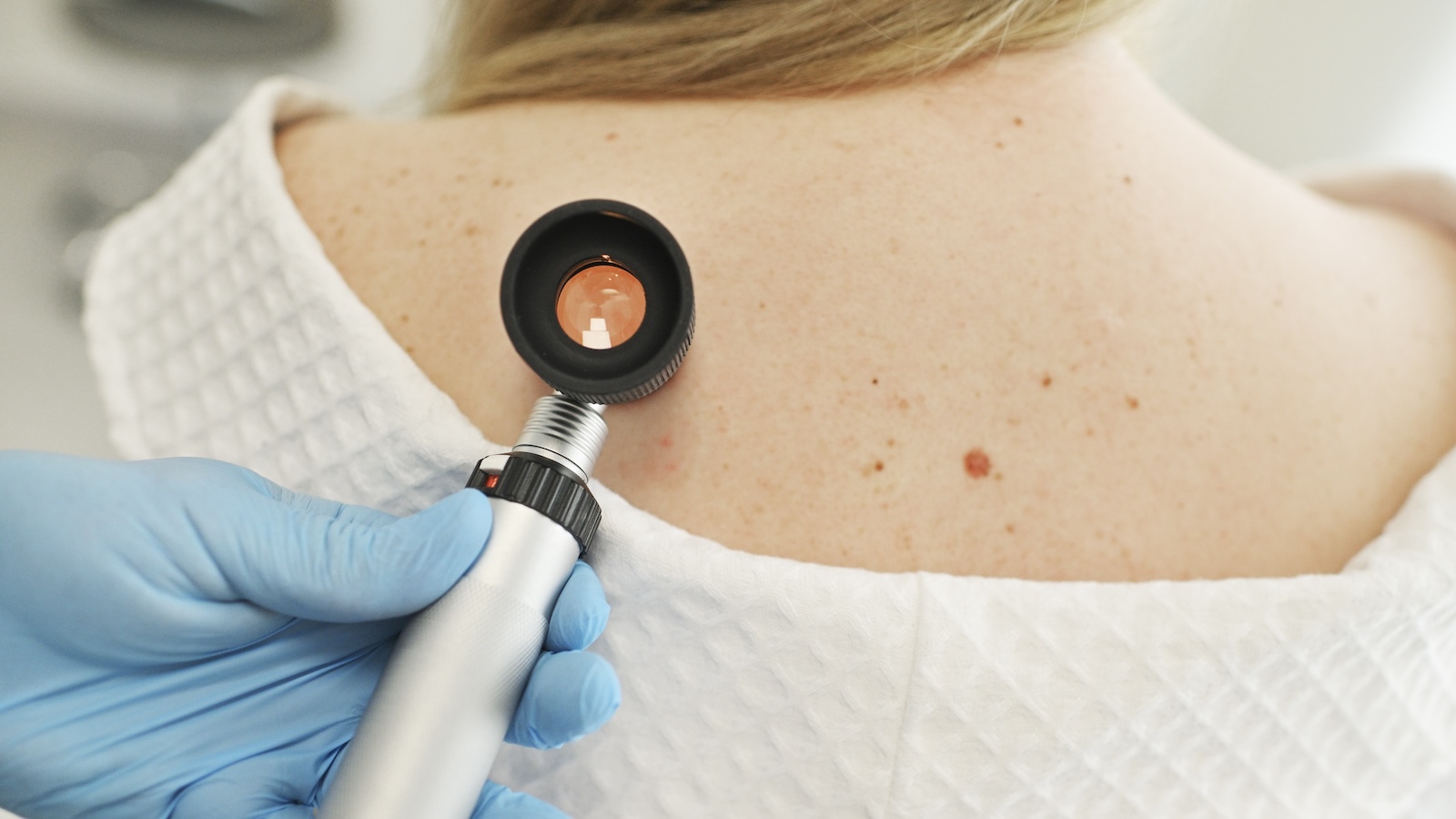
Your PCP can evaluate common skin concerns, identify suspicious spots and refer you to dermatology if needed. A dermatologist can take a closer look, use specialized tools, perform a biopsy and treat skin cancer if necessary.
“The main thing I tell patients is to pay attention to what’s normal for them,” says Dr. Rubinstein. “If something suddenly doesn’t fit that pattern anymore, it’s worth getting checked. You don’t need to know exactly what a spot is – you just need to notice what is new, changing or unusual and take that next step.”